
The NCF 2026 Calendar
The theme of our 2026 calendar is "The Attributes of God." We've selected 12 of these for this year's calendar. Of course, this compilation is limited, but we hope it helps you to think biblically and deeply upon who our God is, as He has revealed Himself to us in His Word. See below to find the calendar, and also commentary for each attribute.
We who bear God's image must be careful to think about God rightly.
First, we need to think about God accurately. According to the futility of sinful man's thinking, we would try to make God in our own image (Romans 1:22–23; Psalm 50:21). Left to ourselves, we would think, "God must be like me, only perhaps a bigger and better version." These are the gods of man's inventing. They are no gods at all. So perish the thought! God Himself asks us, "To whom then would you liken God, or what likeness compare with Him? To whom will you compare me, that I should be like him? To whom will you liken me and make me equal, and compare me, that we may be alike?" (Isaiah 40:18, 25; 46:25). Instead of measuring God by ourselves, we humbly look to His Word, the Scriptures, and receive from Him true knowledge of who He truly is.
Second, when we begin to think about God biblically and accurately, we need to think about Him holistically. Again, left to our own intuition, we tend to make our own caricatures of God. We tend to exaggerate one of His attributes while minimizing another, rather than seeing each of His attributes as being comprehensible only in connection to the whole of who He is. In Romans 2, for example, Paul addresses those who would highlight the riches of God's kindness and forbearance and patience. But they misunderstood these attributes because they did not see them in the light of God's justice and wrath (Romans 2:4–5).
Finally, we need to think about God's attributes in terms of simplicity. When listing out the attributes of God (as we do in this calendar), it's easy to fall into a way of thinking that God is this part, plus this part, plus that part. But God is not the sum of parts. Instead, God simply is who He is (Exodus 3:14). In the words of one theologian, "God is not made up of parts, nor is he compounded or composite in nature. That means he does not possess attributes, as if his attributes are one thing and his essence another. Rather, his essence is his attributes and his attributes his essence. God is his attributes. That means, all that is in God simply is God." Echoing these thoughts, Sinclair Ferguson reminds us in his brief meditation on the simplicity of God, "All of God's attributes are simply who He is."
To think about who God truly is—these are deep waters! But they are glorious waters, refreshing, cleansing, and good for our souls! What a gift that God has given to us, to know Him truly, even if not fully. God has graciously condescended, revealing Himself to us in His creation, in His Scriptures, and in the Lord of all, His Son, Jesus Christ (John 1:18; 17:3; Hebrews 1:1–3a). Our prayer is that this calendar and these commentaries (see below) will help you know God.
You can download the calendar pdf by clicking this link.
January

Artwork by Quinn
Commentary by Tom Depew
When Isaiah hears the seraphim cry, “Holy, holy, holy is the Lord of hosts; the whole earth is full of his glory” (Isaiah 6:3), he is confronted with the infinite, unapproachable majesty of God. This holiness is not a mere attribute among others, but the very essence of who God is—altogether set apart, transcendent, and morally perfect. As J. I. Packer put it, “holy is the word which the Bible uses to express all that is distinctive and transcendent in the revealed nature and character of the Creator, all that brings home to us the infinite distance and difference …” In other words, God’s holiness communicates that He is totally different than us, yet completely righteous and without sin. This realization should humble us deeply: in the face of such holiness, our sin feels weighty, but so does God’s grace. God’s holiness also exposes our deepest need—not self-improvement, but divine mercy. It reveals that we cannot come to Him on our own terms; we must come through the cleansing He provides. And yet, because this same holy God calls us into his presence, we are invited to live in awe, repentance, and devotion. Recognizing God’s holiness moves us to worship with reverence, to pursue holiness in our own lives, and to depend on Christ’s cleansing for the forgiveness of sin—because only a holy God can forgive, and only a holy God is worthy of all our devotion.
February

Artwork by Liliana
Commentary by Andrew Beebe
1 John 4:8: Anyone who does not love does not know God, because God is love.
There are two ways to go wrong with understanding the attribute of God's love. One way is what the world will say, that love is simply an inward desire not directed by truth, and that to love others is to affirm them according to their own desire. The other error is what many Christians will say, that love is not an inward desire at all, but rather action only. But the truth is, love is a desire that leads to action. The love of God is an affection (inward desire). But this is not directed by random emotions, but rather God's affections are directed by what and who he is. That means true love is directed not by what is in you as a human, but what is in God as God. Furthermore, love always leads to action in accordance with this affection. So our action towards others should be motivated by an inward affection that is directed by what is true, righteous and holy. God displayed this most clearly to us when he says in John 3:16, "for God so loved the world that he gave his only Son that whoever believes in him should not perish but have eternal life." Notice the perfect attribute of love displayed there: God had an affection for sinners, therefore, his love is not only action like a robot. But notice his love was not only affection. It was active. And that action was not to affirm sinners in their sin, but instead, he gave up His Son on the cross so that anyone who believes upon Jesus would be forgiven of their sin and have the life of righteousness. Behold the God who is love: he has made a way for sinners to be made righteous by his Son!
March

Artwork by Anonymous
Commentary by TBD
April

Photograph by Ellie
Commentary by TBD
May
Design by anonymous
Commentary by Betuel Vararu
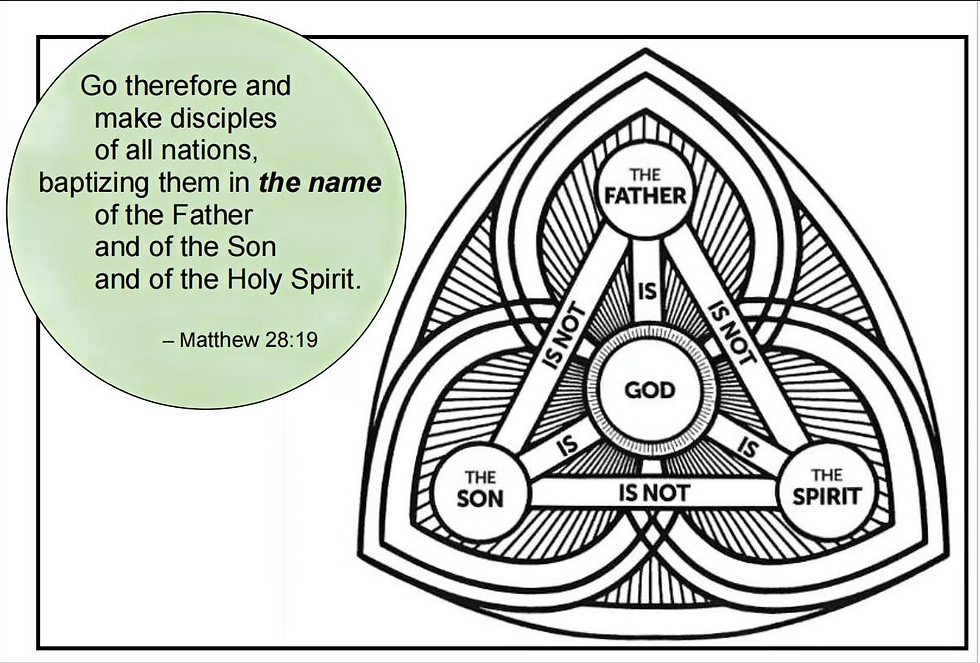
Scripture reveals that the one true God, the Creator of all things, is eternally three in person: Father, Son, and Holy Spirit. The Father is God, the Son is God, and the Spirit is God; yet the Father is not the Son, the Son is not the Spirit, and the Spirit is not the Father. As distinct persons they share the same divine essence, glory, and eternal fellowship of love, and thus are not three Gods, but the one and only God. In the name of this Triune God, Christ commissions His church to make disciples of all nations through baptizing and teaching. Though this mystery is beyond full comprehension, every baptized believer truly knows the living God as He is revealed in Scripture, through faith in our Lord and Savior, Jesus Christ.
June

Artwork by Ellen
Commentary by Tom Depew
“‘Oh, the depth of the riches and wisdom and knowledge of God!’ (Romans 11:33). God’s omniscience means that He does not learn, discover, or infer. He knows all things fully, eternally, and exhaustively. As J. I. Packer often emphasized, God’s knowledge is not merely extensive but perfect; He sees the end from the beginning and all things in between with complete clarity. This truth humbles human pride, reminding us that our understanding is partial and dependent, while His is infinite and unsearchable. Yet it also comforts us deeply: the God who knows all things also governs all things wisely, and nothing in our lives escapes His understanding or falls outside His sovereign care. This means, we can trust Him even when life feels confusing or unresolved, submitting our limited perspective to His perfect wisdom. It also calls us to honesty in prayer, since we cannot hide anything from the One who already knows us completely.
July

Artwork by Ruth
Commentary by Tom Depew
“‘The eyes of the Lord are in every place, keeping watch on the evil and the good’ (Proverbs 15:3). God’s omnipresence means He is fully present in all places at all times—not spread thinly, but wholly present everywhere. As Tim Keller frequently explained, this is both a sobering and a comforting reality: sobering because we cannot hide from God, and comforting because we are never abandoned by Him. There is no corner of creation, nor any moment of our lives, where God is absent. For the believer, this means that in suffering, loneliness, or uncertainty, God is not distant—He is near, attentive, and actively present with His people. This should lead us to live with integrity in private as well as in public, knowing we always live before His face. It also invites us to draw near to Him in every circumstance, confident that He is already near to us.
August

Photograph by Beau
Commentary by Adrian Popa
Our triune God, the only true God of the universe, our Creator and Sustainer has revealed Himself in the Scriptures, among many other attributes, to be omnipotent. That means that nothing is too hard for Him (Gen 18:14), that everything is possible with Him (Mat 19:26), that nothing is impossible with God (Lk 1:37). All that He wishes happens (Psa 115:3), there are none who can stand against His will (Dan 4:35), He is all powerful.
God is sovereign because He is omnipotent, He chose by His will and power to create the universe and the planets, and us on one of those planets. He not only created us, but He had all the authority, power and reason to destroy us for our rebellion. Thankfully, we did not get what we deserved, but got what we didn’t deserve, we got grace and mercy from the Almighty, the all-powerful, sovereign, omnipotent God. How wonderful is that?
God’s omnipotence does not mean that He can do literally anything. And that is because God cannot do anything against His nature. If He could do such a thing, then He would not be God. For example, He cannot choose to no longer be God because He cannot deny Himself (2 Tim 2:13), He cannot lie because of holiness (Heb 6:18), He cannot do or be evil because it goes against His nature as God. Everything that God does is good, because His nature is good. That should bring most peace and comfort even in times of struggle, knowing that God is omnipotent, sovereign and good, His good will is being accomplished in His children right at this moment (Rom 8:28).
September

Artwork by Samuel
Commentary by Dale Kellar
Revelation 1:8 “I am the Alpha and the Omega,” says the Lord God, “who is and who was and who is to come, the Almighty.”
In this single verse, the Holy One draws back the veil and lets us glimpse the grandeur of his eternal being. By calling himself the Alpha and the Omega, God proclaims that he is the source and the goal of all things; the One from whom everything flows and to whom everything returns. Time itself is his creation, and he stands above it in sovereign freedom. Our confidence as believers rests here: every promise God has spoken is anchored in his unchanging character. He is the Alpha, the eternal beginning, the Creator without whom nothing would exist. He is the Omega, the final end toward which all history moves, the One in whom every purpose finds its true fulfillment. He is the God who is, who was, and who is to come; the same God who formed the worlds, upholds every moment of our lives, and will one day dwell with his people forever. He is the Almighty, the One whose power has no boundary, whose will cannot be thwarted, and whose purposes unfold with perfect faithfulness.
As we meditate on this verse, we are reminded that our lives rest securely in the hands of the eternal, unchanging, all-powerful God. Whatever uncertainties we face, we can stand firm knowing that the Alpha and the Omega holds every moment, guides every step, and will bring all things to their appointed end for his glory and our good.
October

Artwork by Mathias
Commentary by Stephen Charnock via Wes Sharp
"God's unchangeableness is the firm footing of the saints; were it not for this, they might waver and be toiled in a tempest. What comfort could be extracted from a wavering, mutable Deity? But since God is of one mind, and cannot be turned, since He is an anchor that cannot be removed, our hope in Him is forever secure."
November

Photograph by Gideon
Commentary by Tim Pasma
December

Artwork by Chloe
Commentary by Ralph Hull
Divine Immanence is the reality of the Lord God Almighty who is high above and thrice Holy, who chooses also to be near and covenantly relational with His redeemed children. Isaiah 57:15 is a vivid verse where God reveals both His transcendence and immanence, two truths that cannot be separated from one another.
Because God is all-powerful and full of compassion in His nature, He condescends to man out of His own free will. Louis Berkhof states, “The presence of God, as it is described in the Old and New Testament, is clearly a personal presence. He is represented as a personal God, who comes and goes, with whom men can converse, whom they can trust, who enters into their experiences, who sustains them in their trials and difficulties, and who fills their hearts with the joy of victory.”
Throughout the Bible, God has revealed His presence. Jer. 23:23–24 states, ““Am I a God at hand, declares the LORD, and not a God far away? Can a man hide himself in secret places so that I cannot see him?” The very existence of God’s written Word declares to us God’s immanence – relational nearness and redemptive presence. The book of Psalms is full of relational evidence of A believer’s fellowship with God, demonstrating God’s immanence. God’s immanence is most realized in God’s coming into His creation (Incarnation) in the Lord Jesus Christ. God the Father sending the Son “Emmanuel,” God with us, to dwell among us in righteousness and then to die for a sinful people in order to reconcile us to a holy God. Not only this, but in His sovereign plan, the Holy Spirit applies this salvation of Christ to the soul of the believer, and dwells within each believer from the moment of salvation. Union with Christ and the indwelling of the Holy Spirit magnificently illustrated God’s immanence in His salvific, covenantal relationship with us.
The whole history of salvation is the story of God’s plan to be relationally present with His
people and to dwell among those who are sanctified and made holy. The Bible reveals God who is drawing near to His own creation in order to bring glory to Himself. Those who have been made humble by the grace of God and who are trusting in the Savior Jesus Christ are promised that God’s Spirit will dwell with them, and that when Christ returns, the saved shall dwell with God for all eternity. Amen.


Comments